Laura Park Designs and the Rise of Luxury Dorm Rooms
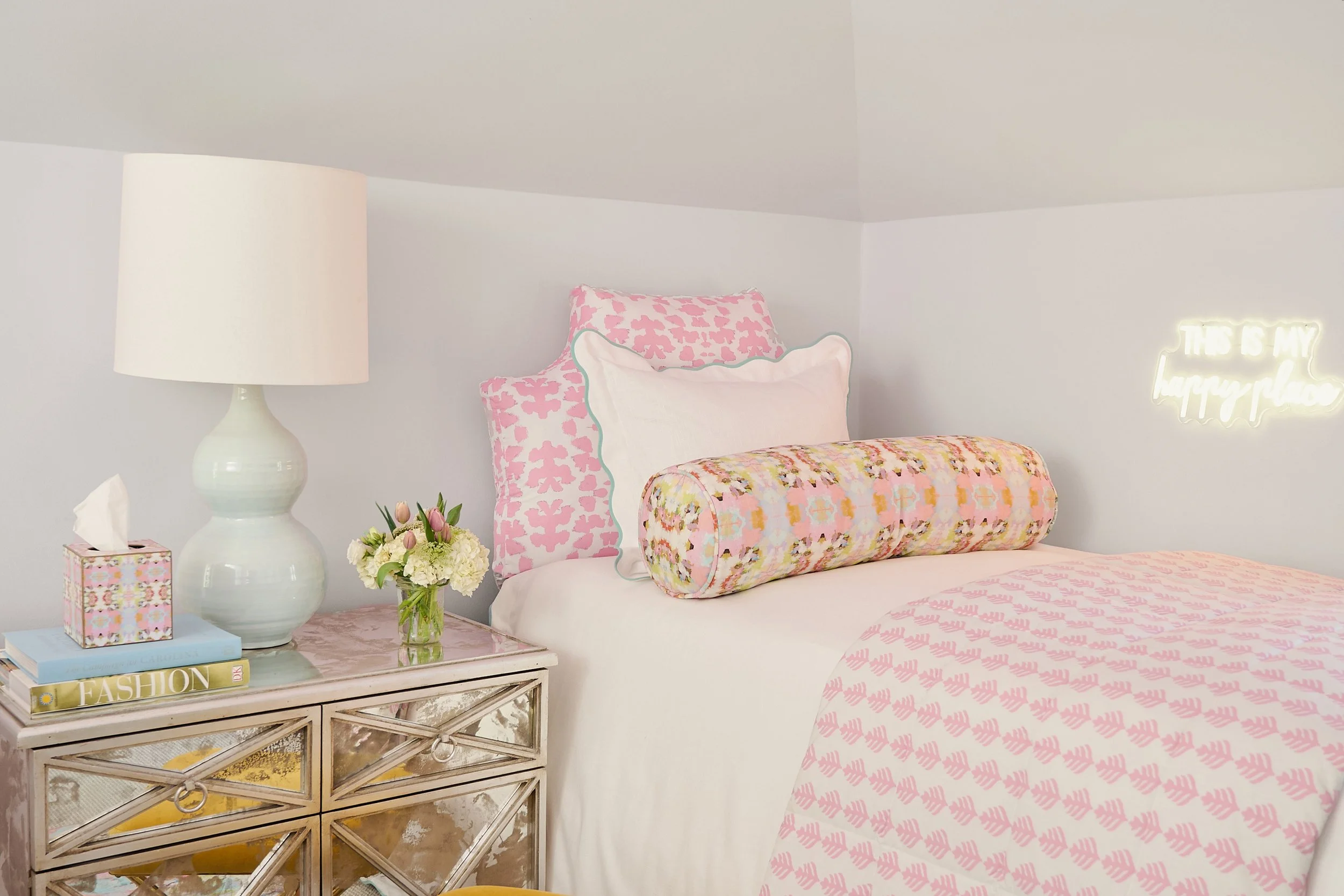
Photo: Laura Park Designs
Every fall, millions of students make their way to university campuses across the United States to begin their freshman year of college. While it’s an exhilarating experience for them, it can also be a touching moment for parents who recall their own college years and what arriving on campus looked like for them that very first day.
Maybe it meant showing up with new bedding from the local department store, string lights that once hung on the family patio, posters brought from their bedroom back home, and a cork board, if the college didn’t provide one, to make sure all the memories from the year were on display for anyone who entered their dorm. For many, their own parents handed them a limited budget of no more than a few hundred dollars to make the space feel a little more like home.
Once those parents shake off that wave of nostalgia, however, they’re quickly reminded that today’s generation of college students is doing things a bit differently when it comes to styling their dorms. That can mean a much bigger budget and, in some cases, even an interior designer.
If you’re a little like me, it can be jarring to scroll through social media and see college students living in dorm rooms that are sometimes decorated better than your house. However, if you’re Laura Park, it might just be business as usual.
As the founder of her namesake brand, Laura Park Designs, which is currently celebrating its 10th anniversary, Laura is no stranger to the elevated college dorm rooms we’re seeing today. While her flagship store is located here in Charlotte, her brand, known for its bold prints and playful use of color, has captured the attention of college students nationwide looking to make her designs the centerpiece of their dorm rooms.
With more students across the Charlotte area preparing to head off to college, I decided it was the perfect time to get Laura’s thoughts on the new way students are elevating their dorm rooms, as well as a few tips for the parents who may find themselves helping fund the whole ordeal.
According to Laura, much of the shift starts with the way today’s students view their dorm rooms in the first place.

Photo: Laura Park Designs
“They’re moving away from home for the first time, and creating a space that feels like theirs makes that transition exciting,” Laura says. While social media has certainly played a role, she believes this generation has also grown up with far greater access to design inspiration than those before them. By the time students arrive on campus, many already know the colors, patterns, and overall aesthetic they want their rooms to have.
Laura sees that firsthand at Laura Park Designs. Some students arrive at the store with an entire vision saved on their phones, while others begin with one piece they love and build the rest of the room around it. More often than not, that starting point is the bedding, with other colors, patterns, and pieces added along the way to create a space that feels distinctly their own.
That mix-and-match approach is something Laura encourages. “I always think a room is more interesting when it feels collected rather than perfectly matched,” she says.
Laura also sees how quickly ideas can spread from one dorm room to another. “One person shares her room, someone else sees a color combination or styling idea she loves, and suddenly there’s a whole new interpretation of it.”
Even roommates are getting in on the planning long before move-in day. Laura says she regularly sees students coordinate their spaces in advance, although that doesn’t necessarily mean creating two identical sides of the room. Instead, choosing a shared color palette or a few complementary colors can provide continuity while still allowing each roommate’s personality to come through.
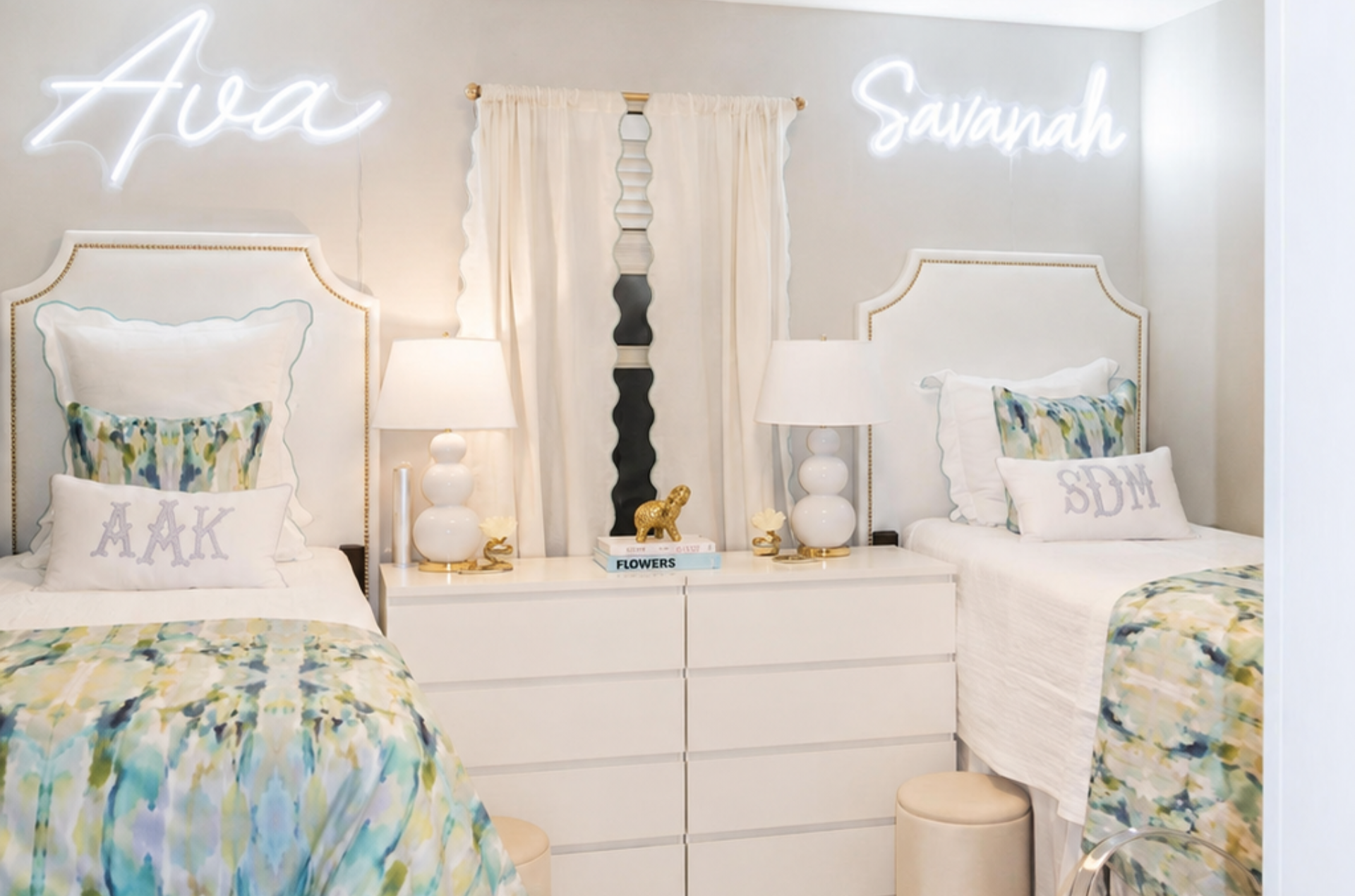
Photo: Essentials with Eden
For all the attention being paid to dorm design, there is still the reality of working with a relatively small space that comes with plenty of rules about what can and cannot be changed. Laura’s advice is to focus on the areas that make the greatest impact rather than trying to transform every inch.
“Start with the bed,” she says. “In most dorm rooms, it’s the largest piece in the space, so great bedding and a few print pillows can completely change the room.”
From there, artwork, a small rug, a throw, good lighting, and a few accessories can bring in additional personality without taking up valuable space. Even necessities can become part of the overall design, with Laura pointing to an attractive laundry bag, storage solutions, or a catch-all tray as ways to make practical items work a little harder aesthetically.
And despite some of the extravagant dorm-room transformations making their way around social media, creating an elevated space doesn’t necessarily require parents to hand over an unlimited decorating budget.
For families deciding where to spend and where to save, Laura recommends putting more money toward pieces that make a significant visual impact and can follow students beyond their freshman year. Bedding is one example. Instead of purchasing something specifically for a twin bed that may only be used for a year or two, Laura suggests considering a queen-size duvet cover or comforter.
“The extra length creates a fuller, more elegant look and works beautifully with a tall bed skirt to hide under-bed storage,” she explains. “Then, in the years that follow, it can move with them to a larger bed.”
The same strategy can apply to pillows and throws. If there’s a pillow a student particularly loves, Laura recommends buying two. One might live on the bed and another on a chair in the dorm before eventually becoming a matching pair on a larger bed or sofa. Throws can similarly make the transition from dorm room to apartment and, eventually, a first home.

Photo: Laura Park Designs
Then there are the places where she says it’s perfectly fine to save. Frames, lamps, storage, and smaller decorative pieces can all be sourced more affordably and mixed alongside investment pieces.
“I’m a big believer in mixing high and low,” Laura says. “It usually makes a room feel more interesting anyway.”
Perhaps that is also a useful reminder amid a dorm-design trend that can sometimes feel like a competition to create the most impressive room on campus. Laura doesn’t believe the goal should necessarily be achieving the “perfect” dorm room. Instead, she sees something more personal behind this generation’s desire to make even a temporary space feel thoughtfully designed.
“A dorm room may be temporary, but it’s still where you wake up, study, spend time with friends, and come home at the end of the day,” she says. “There’s something really joyful about making that space feel like you, especially during such a big transition.”
So, while today’s dorm rooms may look considerably different from the ones their parents moved into decades ago, perhaps the motivation behind decorating them hasn’t changed quite as much. Students still want that small piece of campus to feel like their own. They just happen to have a lot more inspiration, a better duvet, and maybe a slightly larger contribution from mom and dad to make it happen.