The Art of Subtlety: How Quiet Luxury Is Reshaping Plastic Surgery in Charlotte
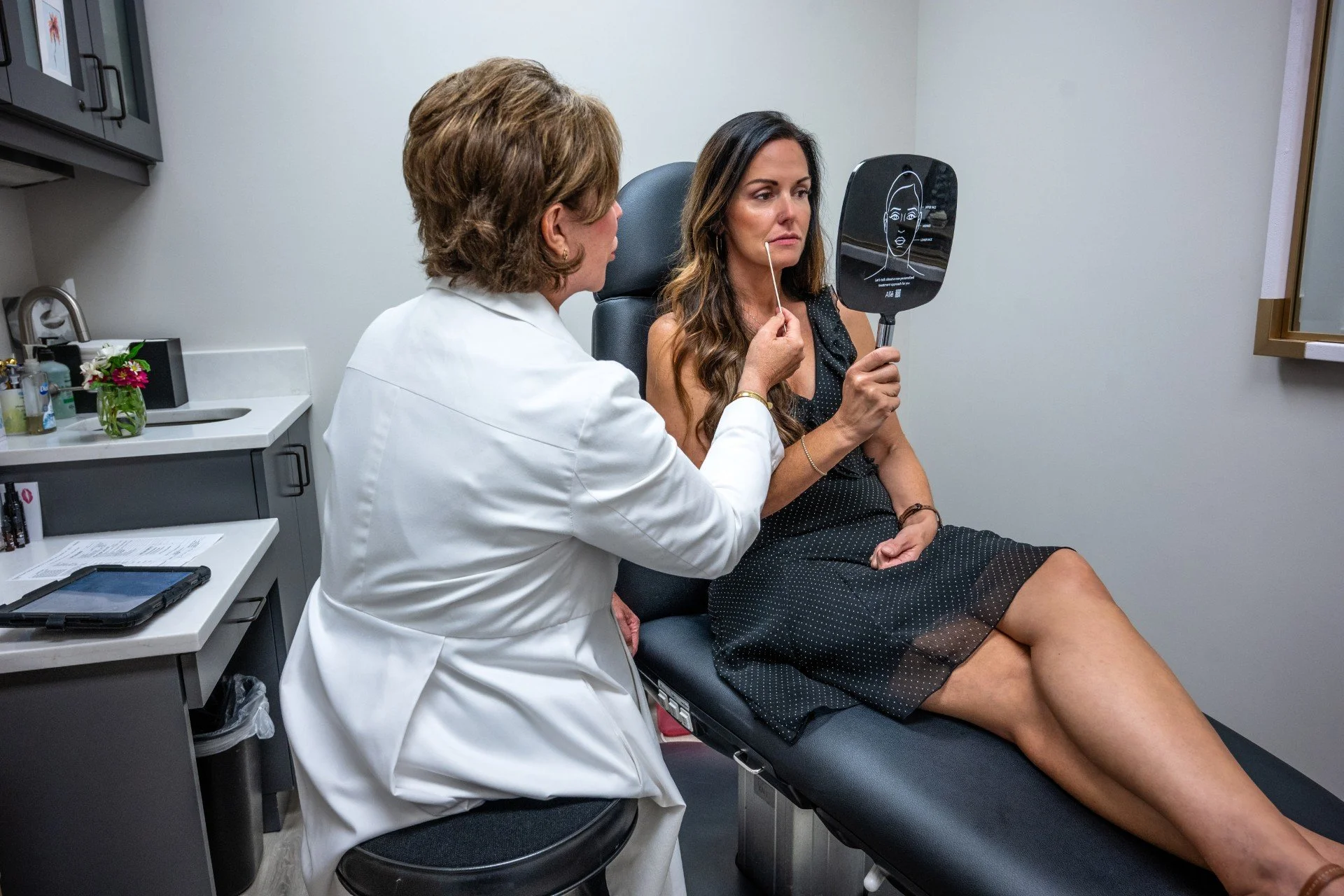
Linda Owens, Lead Aesthetic Injector at Graper Harper Cosmetic Surgery. Photo: Richard Israel Photography
It appears the needle is moving in the world of plastic surgery, and that may mean a little less Botox and filler in the syringe.
The symbols of wealth and status have grown noticeably quieter in recent years, with more people opting for timeless and understated in their everyday lives. Gone are the days when the number of logos on your handbag, the flashiness of your car, or the extravagance of your home were considered a direct reflection of the size of your bank account. Today, luxury is increasingly about what whispers rather than what screams.
And now, the same can be said about plastic surgery.
Overfilled cheeks, exaggerated lips, and larger-than-life derrières are out, and faux all-natural is in. In short, less is becoming more when going under the knife, or even under the needle.
It’s a shift Dr. Garrett Harper of Graper Harper Cosmetic Surgery, one of Charlotte’s leading plastic surgeons, has watched take shape as patients increasingly seek results that look natural rather than noticeably “done.”
But embracing subtlety doesn’t mean the transformation itself has to be minor. A facelift can still significantly change a face, just as a mommy makeover can transform the body. The distinction is whether the finished result announces that work has been done.
“The real expertise is in making those major changes without things looking fake or operated on,” Dr. Harper says.
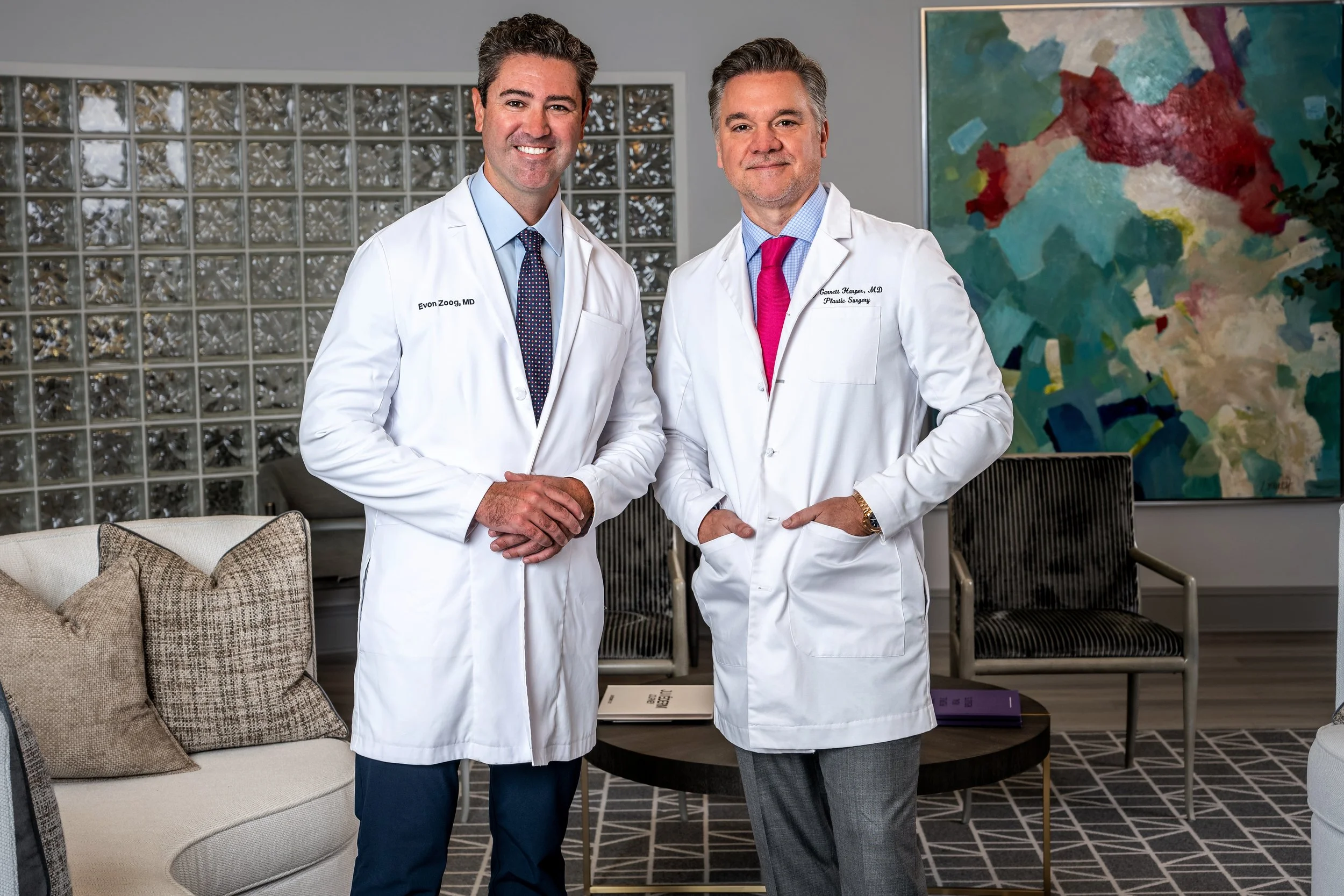
Dr. Evon Zoog (left) and Dr. Garrett Harper (right) of Graper Harper Cosmetic Surgery. Photo: Richard Israel Photography
Subtlety itself isn’t new to plastic surgery. What has changed is the growing number of patients who are actively seeking it. Dr. Harper explains that respecting a patient’s natural anatomy and tailoring procedures to the individual has long been central to his approach, regardless of whatever look happens to be popular at the moment.
That also means knowing when not to operate.
“If you consult with a plastic surgeon that never says ‘no,’ you better run!” he says.
And there can be plenty for a surgeon to push back against, especially when social media has the power to turn a certain face, body type, or procedure into the aesthetic of the moment almost overnight. Over the past decade, everything from exaggerated curves to heavily filled faces has had its turn in the spotlight.
“Luckily, trends are going out of style like they always do,” Dr. Harper says. “Otherwise, they wouldn’t be ‘trends,’ they would be ‘standards.’”
The concern, however, is what happens when the trend disappears before the results do. Dr. Harper cautions that some procedures and aesthetics pursued over the past decade may not age particularly well and, in certain cases, can be difficult to reverse.
While certain aesthetics may be fading, interest in plastic surgery itself certainly isn’t.
One area Dr. Harper is seeing considerable growth in is surgery following significant weight loss. As more patients experience substantial changes to their bodies through weight loss, some are turning to plastic surgery to address loose skin and other changes that remain afterward.
Mommy makeovers are another area where he has noticed increased interest. Rather than pointing to an entirely new procedure, Dr. Harper believes part of that growth comes from patients seeing examples of results that challenge older perceptions of what plastic surgery has to look like.
Facelifts offer one of the clearest examples. For years, an overly tight or dramatically altered celebrity face could become an advertisement for why someone didn’t want plastic surgery. The more natural the results become, the less persuasive that stereotype is.
“We definitely see patients that are more excited about surgery after seeing how beautiful and natural results can and should be now,” he says.
Technology and changing surgical techniques are contributing to that evolution as well.
Dr. Harper points to breast augmentation as one example. Advances in implant technology and surgical approaches have expanded the options surgeons have for determining placement based on a patient’s anatomy. In appropriate patients, implants may be placed in front of the chest muscle, an approach that can avoid disrupting the muscle and may offer an easier recovery.
The pursuit of natural-looking results also doesn’t end when surgery does.
Dr. Harper describes surgical and non-surgical care as complementary. Surgery can reposition or remove skin and tissue, but it doesn’t stop the aging process. Treatments focused on skin quality, including injectables, lasers, and aesthetic services, can play a different role before or after surgery.
“We tell patients after surgery that they need to do everything they can to ‘protect their investment,’” he explains.

Inside Graper Harper Cosmetic Surgery. Photo: Richard Israel Photography
That brings another dimension to the “less is more” movement. It isn’t about abandoning cosmetic treatments or minimizing every transformation. Instead, the focus is on being more intentional about what is done, how much is done, and whether the final result still looks and feels like the person underneath it.
According to Dr. Harper, patients today can pursue noticeable changes without necessarily ending up with the stereotypical “operated” appearance once associated with cosmetic surgery, from facelifts and breast augmentations to larger body transformations.
“I love it when our patients say they get compliments and no one new they meet knows what they’ve had done,” he says. “Now your best friends and partner are going to know, but that’s also kinda the point!”
That’s where plastic surgery and quiet luxury intersect most clearly. Quiet luxury was never about the price tag, but rather the absence of obvious signals announcing it.
The same principle applies to aesthetic work. The investment can be significant and the transformation substantial, yet the finished result can remain remarkably understated.
For Dr. Harper, that approach is nothing new.
“Our approach hasn’t changed,” he says. “It’s kinda cool to see that the philosophy we have always had is now becoming the standard.”
And if the latest shift in plastic surgery is any indication, looking noticeably “done” may be done for good.